
The Democracy, Ethics, and Educational Philosophy (DEEP) research group founded in the University of Kentucky’s College of Education is committed to fostering a deep understanding of democratic principles, ethical practices, and educational philosophies that empower individuals and communities to engage thoughtfully and responsibly in dialogue and action in schools, colleges, and society. Driven by a passion for civic integrity, moral inquiry, and transformative education, our initiative aims to cultivate scholarly excellence, inspire active civic participation, and promote ethically grounded pedagogies. Through innovative programs, community engagement, and interdisciplinary collaboration, we strive to build a vibrant ecosystem where ideas flourish, voices are heard, and lasting contributions are made toward a wiser, more just, and democratic society.

The Democracy, Ethics, and Educational Philosophy (DEEP) Lab
Who We Are
Advancing Kentucky
By partnering with community and national organizations, Lexington schools, the University of Kentucky, and regional leaders, the DEEP research group strengthens Kentucky’s civic life and classrooms by developing ethically grounded curricular tools, training educators, and fostering civic literacy that prepares Kentuckians to participate thoughtfully in public decision-making. Through community-engaged research and interdisciplinary programs tailored to regional, educational, and professional needs, DEEP advances equitable opportunities, amplifies diverse voices, and helps build a more just, resilient, and democratically informed Commonwealth.
In educational policy, to offer an example, we have members who have studied corporal punishment and called for the end of its use as a practice, as Dr. Weber did in 2016 in the newspaper (https://www.kentucky.com/opinion/op-ed/article103801976.html), before he met with Kentucky Youth Advocates and then KY Education Commissioner Jason Glass's staffers to call for ending corporal punishment. Then, in March of 2023, he presented on "Kentucky's Potential for Leadership in Educational Ethics: Calling for an End to Corporal Punishment in American Schools," as an invited talk for Bellarmine University's Commonwealth Ethics Lecture (Watch: https://ericthomasweber.org/kys-potential-for-leadership-in-educational-ethics-calling-for-an-end-to-corporal-punishment-in-american-schools/). By the end of 2023, the last school districts in Kentucky decided to ban the practice (https://www.kentucky.com/news/local/education/article281378858.html).
We now believe it is time to showcase Kentucky's progress as a guide for other states. Members of the team are now advocating for Kentucky to formally ban corporal punishment at the state level, codifying our districts' progress in state law. We can formalize the changes that have been recommended by the American Academy of Pediatrics and the American Psychological Association. This is but one example of a policy issue and area of interest for the DEEP research group in which our inquiries are both philosophical and doggedly focused on the practical relevance of the conflicts and ideas that we study.
Our Team
The DEEP research group is an interdisciplinary community of scholars founded at the University of Kentucky, including former students serving at other institutions, all interested in collaborating on intellectual community building and on meeting and writing for works in progress, conference preparation, journals, periodicals, and grants, and to study and argue about pressing issues for democracy, schools, and universities. Faculty members' backgrounds center on philosophy, sociology, education, and history, and include scholars from the College of Education and from the College of Arts and Sciences. We also feature members with significant depth of expertise in qualitative and quantitative research methodologies, enabling exciting collaborations in which we can test out new ideas for policy and practice.
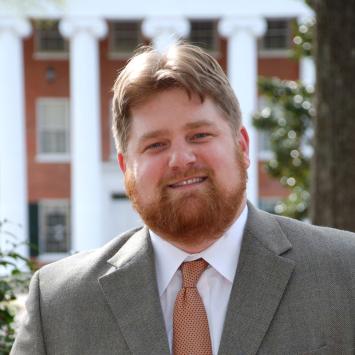
Director, Eric T. Weber
| Photo | Contact Info |
|---|---|
|
Eric Thomas Weber Director of Graduate Studies, Professor |
Members
- Kaylen Addison (EPE grad student, UKY)
- Anthony Cashio, Ph.D. (UVA Wise)
- Regina Chambers (EPE grad student, UKY)
- Heather Cowherd (EPE grad student, UKY)
- Derek Daskalakes (EPE alumn, faculty at U of Tx at Tyler)
- Amy Dern (EPE grad student, UKY)
- Jennifer Disponette (EPE grad student, UKY)
- Jennifer Doyle, Ph.D. (UKY CoE)
- Arnold Farr, Ph.D. (UKY Philosophy)
- Jamar Green (EPE grad student, UKY)
- James William Lincoln (Phil alumn, faculty at Lasell University)
- Kathryn Mattingly, Ph.D. (EPE alumna, UKY)
- Nash Meade (EPE grad student, UKY)
- Edward Morris, Ph.D. (Sociology, UKY)
- Sarah Mudd (EPE grad student, UKY)
- Ted Nilsson (EPE grad student, UKY)
- Adeola Oladeji (EPE grad student, UKY)
- Maria Richie (EPE grad student, UKY)
- Christopher Robershaw (EPE grad student, UKY)
- Tanner Williams (EPE grad student, UKY)
Current Research
"Democratic Dialogue Under Constraint: Philosophical Support for Social Studies Teachers’ Self-Efficacy"
Eric Thomas Weber, Jennifer Doyle, and Kathryn Mattingly
This study asks: How does structured collaboration with academic philosophers applying deliberative democratic insights influence teacher self-efficacy, instructional decision-making, and classroom discourse practices for high school social studies teachers when addressing controversial issues? We build on the tradition of deliberative democracy to revise existing philosophical tools for dialogue, particularly “one-sheets” and their companion values statement, and to inform instructions for facilitators, to measure effects on teacher self-efficacy and democratic pedagogy under polarized conditions. Our aim is to study social studies teachers to learn whether support in collaboration with philosophers from higher education might prove beneficial. We will study two cycles of 10 social studies teachers, who will each gain support, cocreation experience, and instruction on studied mechanisms. We hope to better understand the challenges that social studies teachers face in facilitating conversations on controversial subject matters in social studies classrooms. Our first group of teachers will be in Lexington, KY, and the second in Columbia, SC. Our mixed methods involve surveys and interviews in a collaborative team of philosophers and social scientists. We hope to empower teachers for discussions on controversial matters, addressing a gap in the literature on potential impacts of collaboration between philosophers and social studies teachers. (Proposal under review)
“Examining Perceptions of Libraries’ Support for Informal Adult Education & Intellectual Community-Building”
Eric Thomas Weber (UKY) and Derek Daskalakes (U of Tx at Tyler)
Historically, libraries have been quiet environments with a focus on providing access to books and other media (Stanwicks, 2016), yet today their purposes have diversified greatly, and they are often locations for meetings, conversations, and community-building, a kind of town hall (Aabo et al., 2010). In a period of heightened political polarization, libraries represent a special democratic kind of space in the community (Scott, 2011) for sharing intellectual resources. While nearly all libraries offer programming for children, adults are less often the targets of library programming (Augst, 2001). As higher education scholars with affiliations to organizations that offer informal educational opportunities, we are interested in exploring the perceptions of library employees and patrons regarding how libraries are currently supporting adult informal learning and intellectual community-building. Further, differences have been found between community needs expressed in rural versus urban settings (Jaeger et al., 2011; Real et al., 2014). Therefore, we will examine the perceptions of librarians and library patrons from urban and rural settings on the community’s needs for intellectual conversational programming and community-building. We hope thereby to determine the prospects for new collaborations between intellectual community-building organizations and public libraries. Our proposal’s aims align with the IMLS’ (2024) financial assistance priorities, especially goals 1 and 2 in their most recent financial report including the priorities to “champion lifelong learning” and to “strengthen community engagement” (p. 23). (Proposal in development)
Regular Activities
Check-It-Out Chats
This is the name for our spin on a reading group. Reading groups can be terrific and may be planned traditionally, but our aim at first with these “chats” is to make it as easy as possible for people to participate. If people wish to read a book or text in advance and can prepare, they are welcome to, but the purpose of these meetings will be to enable someone in the group to introduce to the group some idea, tool, or book that they are genuinely excited about or moved by, sharing that with others.
Workshops
As a research group, we seek members’ input on desired workshops that would advance the fellows’ professional and scholarly interests. These can include meetings about how to pitch articles to periodicals like newspapers, professional blogs, and online periodicals. Another workshop is likely to concentrate on the job market. We can also plan workshops for engaging community partners in early thinking to brainstorm new projects in collaborations with community members.
Exploratory Research Symposia
We will plan a working papers series to hold symposia either each semester or once a year. For example, in the spring of 2027, we will hold a symposium on "Ethics in Higher Education."
Mentorship, Writing, and Grant-writing Collaborations
We have begun a number of collaborations on writing projects and grant applications. In years to come, we may formalize a "flat" mentorship effort, in the sense that each of us has much to teach each other. Grant applications are in progress, furthermore, and for all, we hold "Agraphia" meetings for research and writing accountability purposes every two weeks.
Presentations and Publications
- ARTICLE: Daskalakes, Derek and Eric Thomas Weber. (2026). School Corporal Punishment and the Undermining of Students’ Educational Rights: A Normative Case for Funding-Based Consequences. Revising for resubmission.
- ARTICLE: Daskalakes, Derek. (2026). John Dewey, School Corporal Punishment, and Educational Authenticity: Expanding the Educational Case Against Its Use in US Schools. Educational & Culture, forthcoming. https://docs.lib.purdue.edu/eandc/.
- PRESENTATION: Weber, Eric Thomas. (2026). Public Schools' Origins in Consent of the Governed. Gaines Spring Forum, Gaines Center for the Humanities, the University of Kentucky. January 22, 2026.
- ARTICLE: Nilsson, Ted and Eric Thomas Weber. (2025). Revisioning Honors Programs as University Academic Service. Philosophy and Theory in Higher Education 7, no. 3: 387-403. https://www.peterlang.com/document/1677046.
- BOOK: Weber, Eric Thomas. (2025). A Culture of Justice. Albany, NY: SUNY Press. https://sunypress.edu/Books/A/A-Culture-of-Justice.
News
- On Monday, April 27, we will host our first Exploratory Research Symposium, a gathering to discuss works in progress, this time on "Ethics in Higher Education." We will share news about how to participate with the College of Education and via Dr. Weber's social media profiles.
- We held our first Check-It-Out Chat on Monday, 3/2/26, on "The Future of Work in the Age of A.I. and What It Means for Education," with the leadership of facilitator Dr. James William Lincoln.

Team members met for a Check-It-Out Chat on Monday, 3/2/26, on "The Future of Work in the Age of A.I. and What It Means for Education."
Contact Us
